Field sales has evolved rapidly over the last few years. What once worked with phone calls, spreadsheets, and end-of-day reports now struggles to keep up with the pace of modern business. In 2026, sales leaders expect clarity, control, and consistency across their field operations.
This is where a modern field sales platform becomes essential not as a tool, but as an operational foundation.
Instead of focusing on features, it's more useful to understand the core components that make a field sales platform effective in today's environment.
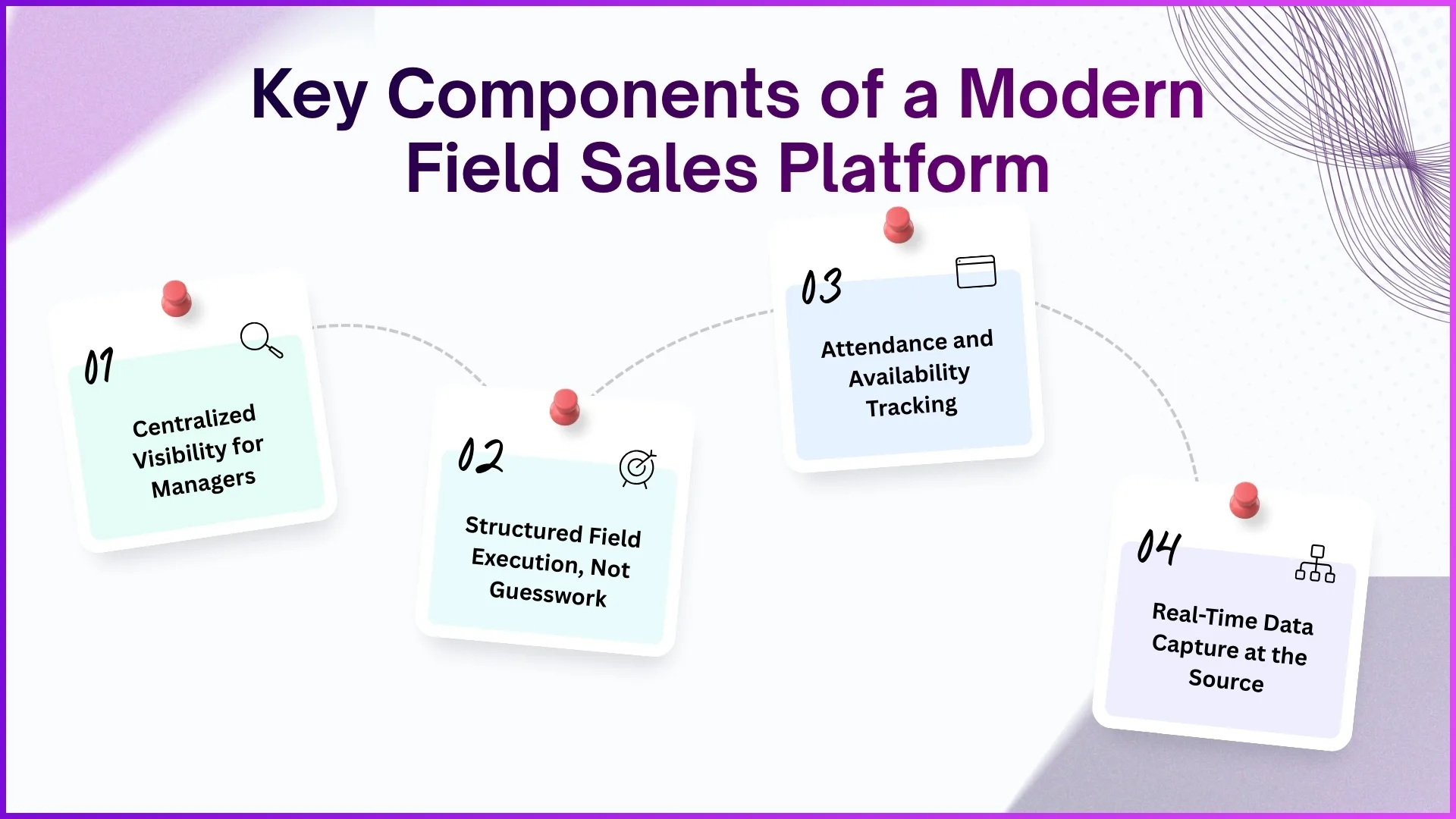
Components of a Modern Field Sales Platform
- Centralized Visibility for Managers
- Structured Field Execution, Not Guesswork
- Attendance and Availability Tracking
- Real-Time Data Capture at the Source
- Sales Activity and Order Flow Management
- Expense and Claim Management Alignment
- Performance Reporting That Drives Action
- Configurability for Different Sales Models
- Role-Based Access and Control
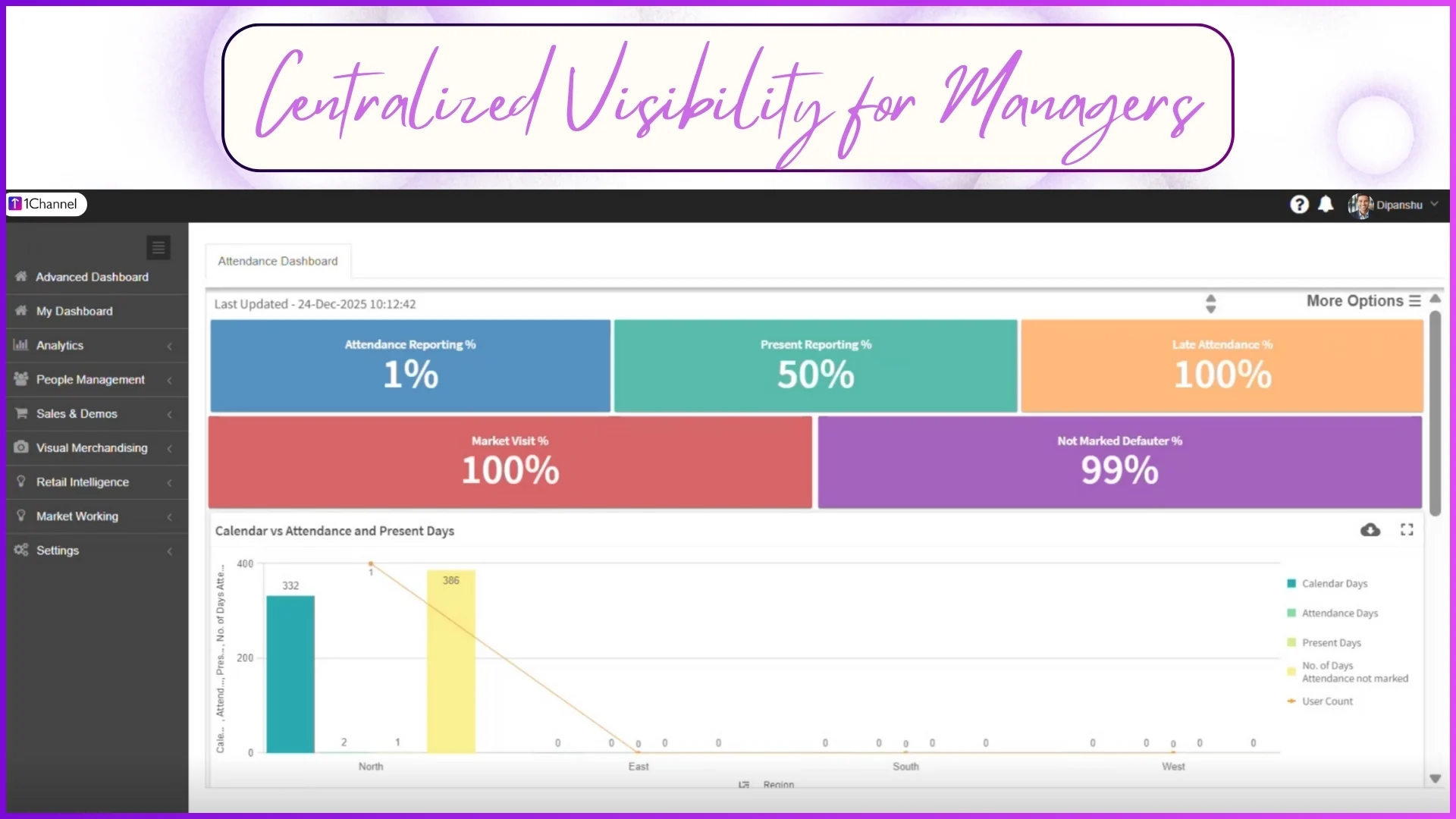
Centralized Visibility for Managers
One of the biggest challenges in field sales has always been visibility. Managers often know what the team should be doing, but not what is actually happening on the ground.
A modern field sales platform brings all field activity into a single, centralized view. This allows leaders to:
- Monitor daily execution
- Identify gaps early
- Make decisions based on live data, not assumptions
In modern business environment, delayed visibility is no longer acceptable. Real-time awareness has become a baseline expectation.
Structured Field Execution, Not Guesswork
Field sales success depends on consistency. Without structure, execution varies from one salesperson to another.
A modern platform introduces structured workflows for daily field activities. This ensures that:
- Sales reps follow a defined process
- Market visits are planned, tracked, and reviewed
- Missed activities are visible, not hidden
This structure doesn't restrict teams it helps them perform reliably at scale.
Attendance and Availability Tracking
Knowing whether a team is active on the field should not require phone calls or follow-ups.
Modern field sales platforms capture:
- When a rep starts the day
- Where field activity happens
- How long productive work continues
This creates transparency for both management and HR, reducing friction around productivity, compliance, and performance evaluation.
In today's environment, accountability must be system-driven, not manual.
Real-Time Data Capture at the Source
Manual reporting has always been a weak link in field sales. Data entered hours or days later loses accuracy and relevance.
A modern platform focuses on capturing data at the moment of action:
- Visits
- Orders
- Observations
- Market feedback
This approach improves data reliability and ensures decision-makers are working with information that reflects reality not memory.
Sales Activity and Order Flow Management
Beyond visits, field sales platforms must support the full sales flow from opportunity to order.
Modern systems help teams:
- Track sales interactions
- Record orders accurately
- Reduce dependency on manual paperwork
- Maintain consistency across locations
This reduces errors, improves turnaround time, and strengthens coordination between field teams and back-office operations.
Expense and Claim Management Alignment
Expenses are a sensitive area in field sales. Manual claim processes often lead to delays, confusion, and disputes.
A modern field sales platform integrates expense capture and approval into daily operations. This ensures:
- Faster claim submissions
- Clear approval workflows
- Better cost visibility for finance teams
When expenses are handled as part of the system, trust improves on both sides.
Performance Reporting That Drives Action
Reports should do more than summarize the past. In a modern platform, reporting is designed to support action, not just review.
Effective reporting components:
- Highlight trends, not just numbers
- Compare performance across teams and regions
- Help managers identify where intervention is needed
Nowadays, reporting is valuable only if it leads to faster and better decisions.
Explore Sales Force Automation
Empower your field teams with 1Channel's AI-powered SFA platform. Drive efficiency, boost sales, and gain real-time visibility across your entire sales operations.
Explore SFA Solutions →Configurability for Different Sales Models
No two field sales operations are identical. A modern platform must adapt to:
- Different team structures
- Varying approval flows
- Multiple product or market types
Flexibility ensures the system supports the business not the other way around.
This adaptability is critical for organizations that are growing or expanding into new markets.
Role-Based Access and Control
Field sales platforms serve multiple stakeholders like sales reps, managers, HR, finance, and leadership.
A modern system ensures:
- Each role sees what is relevant
- Sensitive data is protected
- Responsibilities are clearly defined
This improves efficiency while maintaining governance.
Final Thought
A modern field sales platform is not defined by a long feature list. It is defined by how well it connects execution, visibility, and decision-making.
Organizations that invest in the right components gain:
- Better control over field operations
- Higher data reliability
- Stronger alignment between teams
- A scalable foundation for growth
The real value lies not in automation alone, but in building a system that supports how field sales actually works today.