Effective territory management is essential for organizations that operate across multiple regions, teams, and customer locations. As businesses scale, managing geographic coverage, reporting relationships, and operational accountability becomes increasingly complex. Hierarchical mapping provides a structured way to organize territories, align teams, and ensure seamless execution across all levels of the organization.
This blog explores how hierarchical mapping enables better territory management by defining clear levels, improving visibility, and simplifying control across distributed sales and field operations.
Understanding Hierarchical Territory Mapping
Hierarchical territory mapping is the process of organizing territories into multiple structured levels that reflect an organization's operational and reporting framework. Each level represents a defined scope of responsibility, enabling better alignment between business goals and field execution.
Instead of managing locations or teams in isolation, hierarchical mapping allows organizations to connect territories logically from top-level regions down to individual stores or outlets.
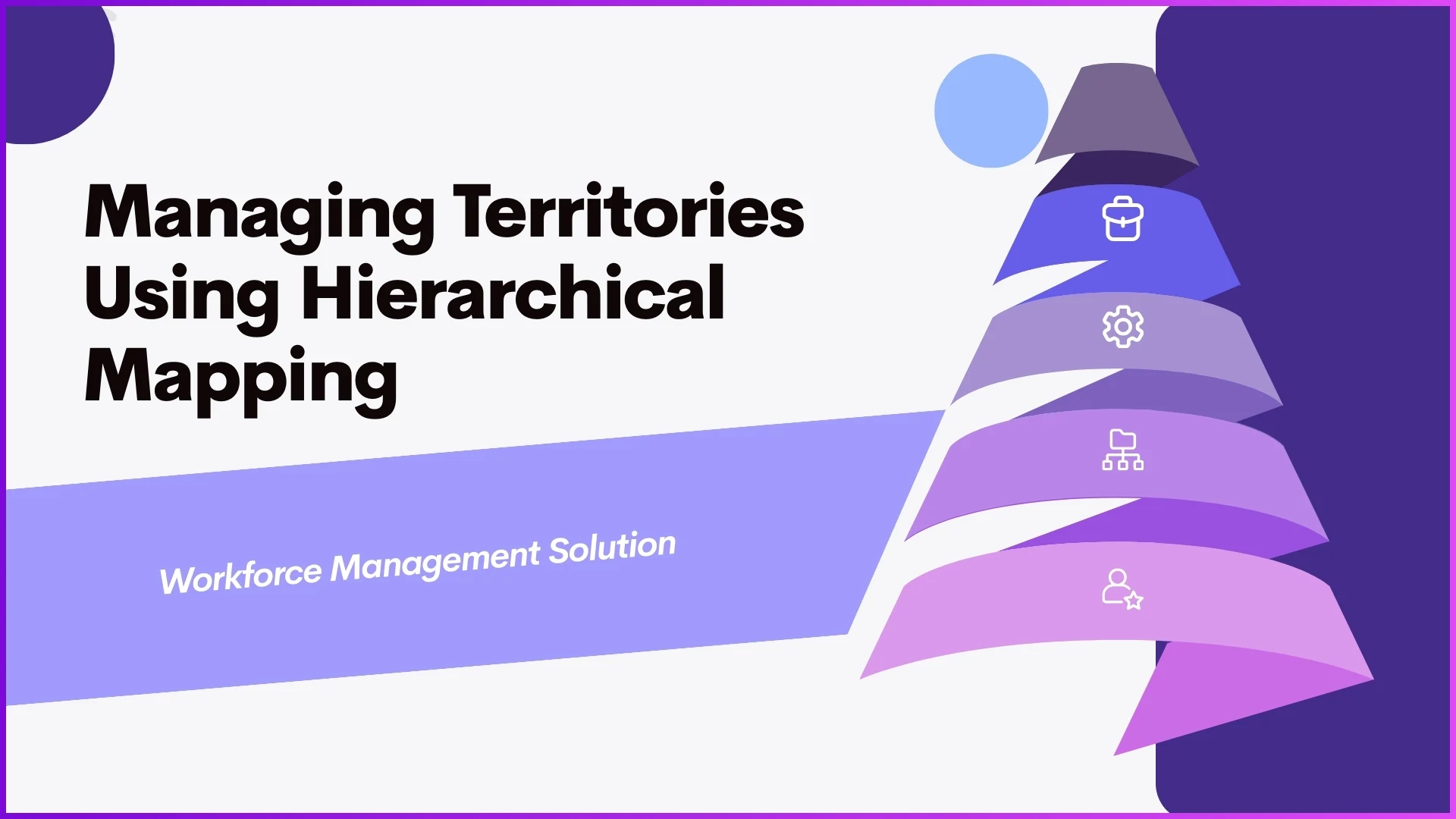
Key Territory Levels in a Hierarchical Structure
Top-Level Territories
At the highest level, territories represent broad operational areas such as countries, zones, or major regions. These territories provide a macro view of business performance and help leadership monitor large-scale operations efficiently.
Mid-Level Territories
Mid-level territories typically include states, clusters, or districts. These levels act as a bridge between strategic oversight and ground-level execution, allowing managers to track performance, allocate resources, and supervise teams more effectively.
Bottom-Level Territories
The lowest level of the hierarchy consists of individual locations such as stores, outlets, or customer points. These are the execution points where field activities occur and data is collected for reporting and analysis.
Explore Workforce Management Software
Manage your field teams, territories, attendance, and performance with structured workforce management tools designed for operational excellence.
Explore Workforce Management →Role of Organizational Hierarchy in Territory Management
Territory mapping is closely linked to an organization's reporting structure. Each territory level can be aligned with specific roles such as regional heads, managers, or field executives. This alignment ensures:
- Clear ownership of territories
- Defined reporting relationships
- Improved accountability across teams
By mapping territories to organizational roles, businesses can maintain operational clarity and reduce overlaps or gaps in responsibility.
Benefits of Hierarchical Mapping for Territory Management
Improved Visibility and Control
A hierarchical structure provides complete visibility into how territories are organized and managed. Leaders can easily view performance at any level, from high-level regions to individual locations.
Simplified Territory Assignment
Hierarchical mapping makes it easier to assign and reassign territories as business needs change. New territories can be added without disrupting the existing structure.
Better Resource Allocation
With a clear hierarchy in place, organizations can distribute manpower, inventory, and operational focus more effectively across territories.
Scalable Operations
As businesses grow, hierarchical mapping supports seamless expansion by allowing new regions, clusters, or locations to be integrated into the existing framework.
Managing Stores and Locations Through Hierarchy
Store or outlet management becomes more efficient when locations are mapped under defined territory levels. Each store inherits its reporting and operational structure from the hierarchy above it, ensuring consistency in execution, monitoring, and data collection.
This structured approach reduces manual oversight and ensures that every location operates within a clearly defined framework.
Maintaining Flexibility Within a Structured Framework
While hierarchical mapping provides structure, it also allows flexibility. Territories can be updated, merged, or reorganized to reflect market changes, operational needs, or business growth without compromising overall control.
How 1Channel Supports Hierarchical Territory Management?
1channel enables businesses to implement hierarchical territory mapping by allowing structured creation of territory levels, seamless alignment with organizational roles, and efficient store mapping. With clear visibility across all hierarchy levels, teams can manage operations, monitor performance, and scale effortlessly while maintaining control.
Transform Your Territory Management Today
Discover how 1Channel Sales Force Automation helps you manage territories, align teams, track performance, and scale operations with complete visibility and control.
Explore Sales Force Automation →FAQs
What is hierarchical territory mapping?
Hierarchical territory mapping is a structured way of organizing territories into multiple levels, enabling better management, visibility, and accountability across regions, teams, and locations.
Why is hierarchical mapping important for territory management?
It helps organizations manage complexity, align territories with reporting structures, and maintain operational control as the business grows.
Can hierarchical mapping support business expansion?
Yes, hierarchical mapping allows new territories, regions, or locations to be added easily without disrupting existing structures.
How does hierarchical mapping improve accountability?
Each territory level is linked to specific roles or teams, ensuring clear ownership and responsibility at every level.
Is hierarchical mapping limited to sales teams?
No, hierarchical mapping can be used across various field operations, including distribution, merchandising, and store management.