Secondary sales tracking plays a critical role in understanding how products move from distributors to retail outlets. However, tracking this movement accurately becomes challenging when distributor-to-store relationships are not clearly defined.
Distributor mapping bridges this gap by creating a structured linkage between distributors, stores, and sales data, enabling reliable secondary sales visibility and reporting.
This blog explains distributor mapping for secondary sales tracking, its operational workflow, and its importance, based entirely on the provided system capabilities and modules.
What Is Distributor Mapping in Secondary Sales Tracking?
Distributor mapping is the process of linking distributors with their respective retail outlets and users within the system. Every store is mapped to a distributor, ensuring that secondary sales recorded at the store level are correctly attributed to the responsible distributor.
Example
If a retail outlet records SKU-wise secondary sales, the mapped distributor automatically becomes the source entity for that sale, ensuring accurate distributor-level sales tracking.
Explore Distributor Management Software
Streamline distributor mapping, store assignments, and secondary sales tracking with comprehensive distributor management tools.
Explore Distributor Management →Role of Distributor Mapping in Secondary Sales Visibility
Secondary sales data becomes meaningful only when it is correctly mapped. Distributor mapping ensures that sales captured at the store level flow into distributor-wise secondary sales reports.
Example
When a field user logs secondary sales for a store, the system identifies the mapped distributor and includes that data in distributor-level secondary sales reports without manual intervention.
Distributor Management Structure Supporting Mapping
Distributor mapping is supported through a structured distributor management setup, which includes:
- Distributor master creation
- Distributor upload for bulk onboarding
- Distributor store mapping
- User-distributor mapping
- Distributor stock upload and stock-in management
This structure ensures that distributor data remains aligned with store and sales records.
Example
A newly added distributor can be uploaded through the distributor master and immediately mapped to multiple stores, enabling instant secondary sales tracking for those outlets.
Store-Level Mapping for Accurate Secondary Sales
Each store is mapped to a distributor either individually or through bulk upload. This store-level mapping ensures that every secondary sale logged against a store is attributed correctly.
Example
If a promoter records secondary sales for Store A, the system automatically associates the sale with Distributor X based on the predefined mapping.
User-Distributor Mapping and Field Execution
User-distributor mapping ensures that field users are aligned with specific distributors. This alignment improves accountability and prevents data mismatch during secondary sales entry.
Example
A field user assigned to Distributor Y will record sales only for stores mapped to that distributor, maintaining clean and validated secondary sales data.
Secondary Sales Reporting Through Distributor Mapping
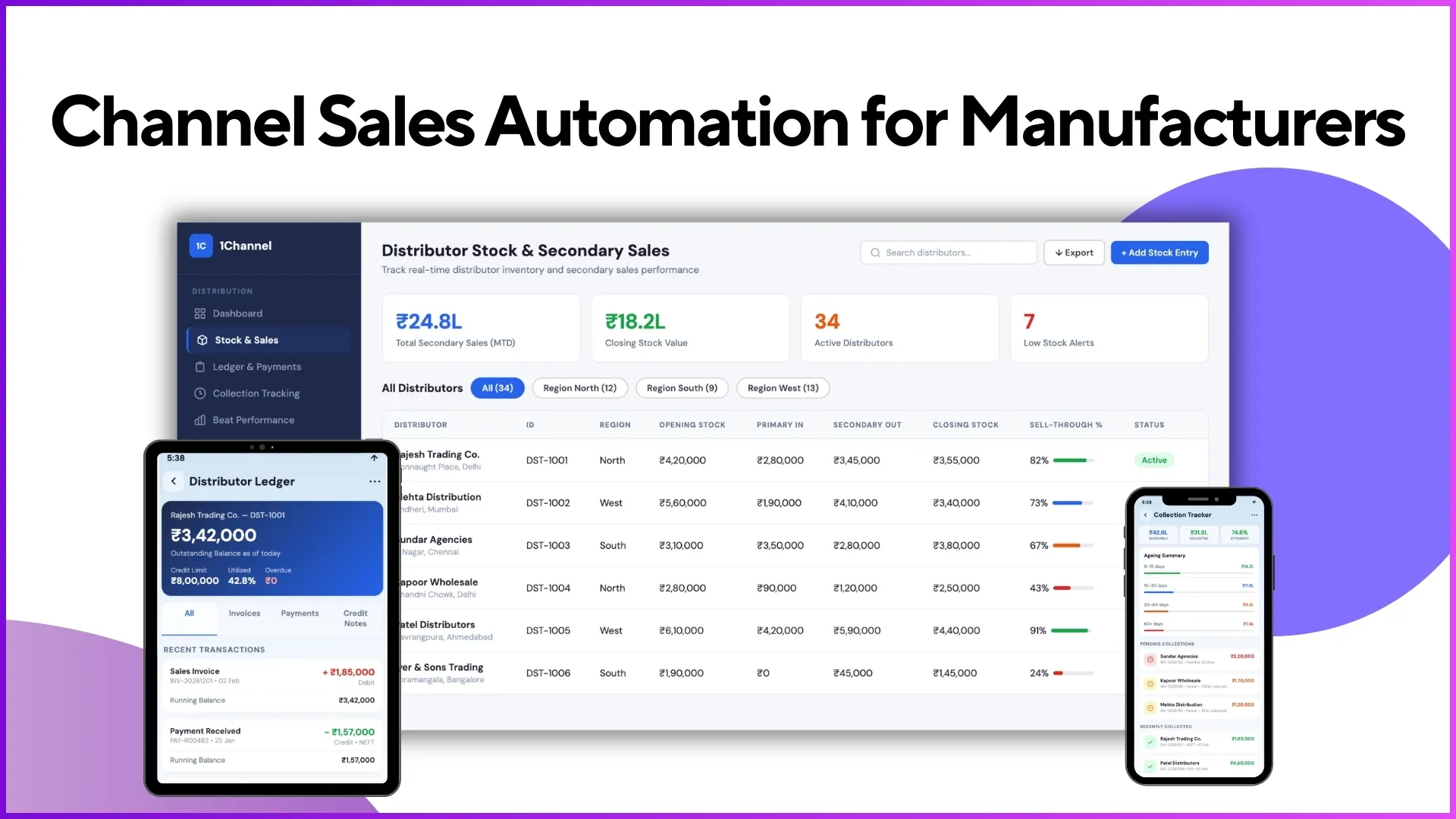
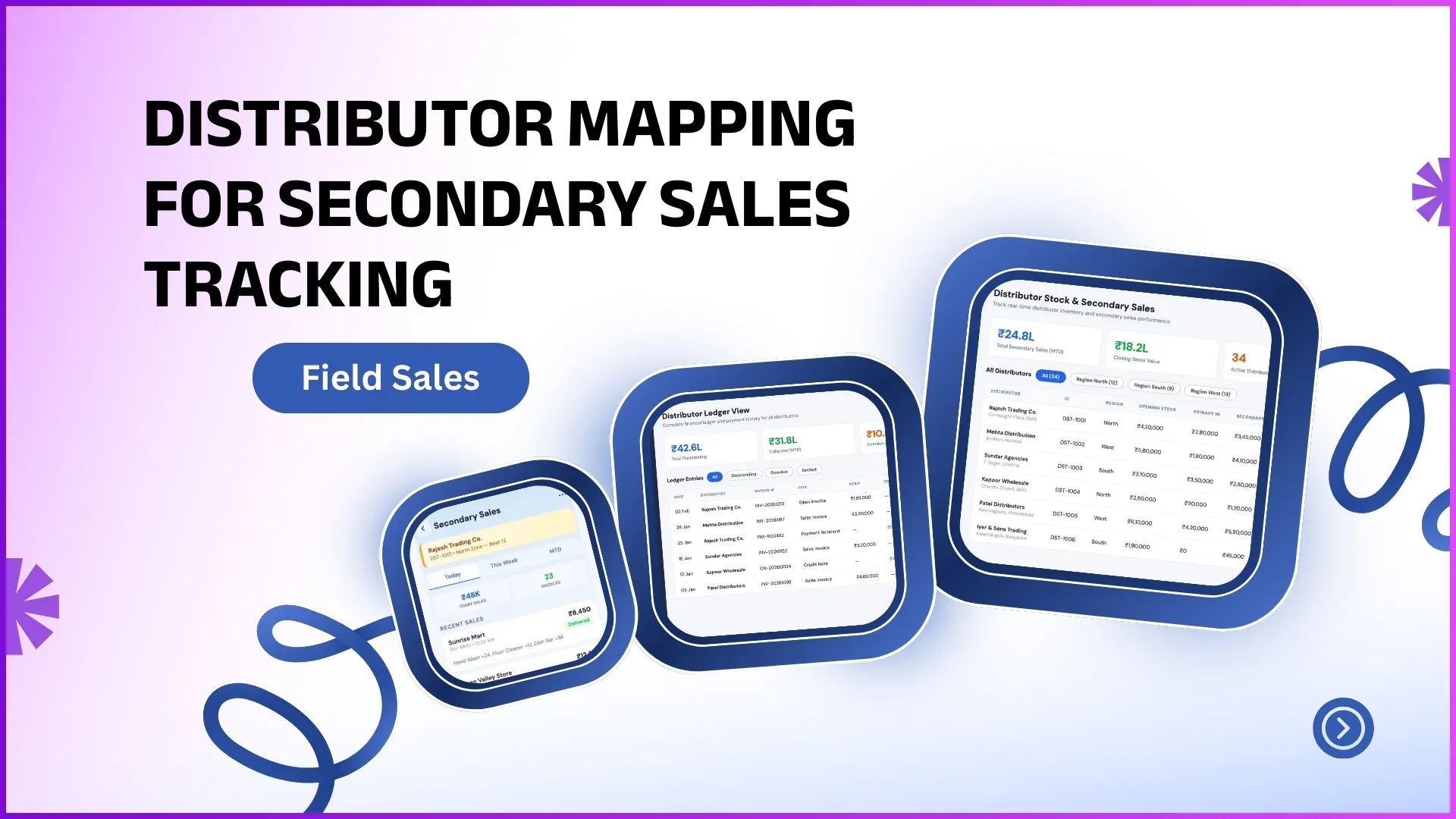
Distributor mapping directly feeds into secondary sales reporting available within the analytics module. Reports provide detailed secondary sales data by store, SKU, and date.
Example
A secondary sales report can show distributor-wise SKU movement for a selected date range, helping teams analyze sales performance accurately.
Bulk Upload and Data Consistency
Bulk upload features allow distributor-store mapping and user-distributor mapping to be managed efficiently at scale. This reduces manual effort and ensures consistency across large store networks.
Example
For a nationwide rollout, distributors and their mapped stores can be uploaded in bulk, instantly enabling secondary sales tracking across regions.
Operational Benefits of Distributor Mapping
Distributor mapping improves operational clarity by ensuring:
- Accurate distributor-level secondary sales data
- Clean alignment between stores, users, and distributors
- Reliable reporting without manual reconciliation
Example
Sales teams can instantly validate distributor performance based on actual store-level secondary sales data rather than estimates.
How 1Channel SFA Supports Distributor Mapping for Secondary Sales
The 1Channel SFA system provides built-in distributor management and mapping capabilities that connect distributors, stores, users, and secondary sales data within a single workflow.
With options like distributor master management, distributor-store mapping, user-distributor mapping, and detailed secondary sales reporting, businesses can maintain accurate and scalable secondary sales tracking.
Transform Your Sales Force Operations
Discover how 1Channel Sales Force Automation helps you implement distributor mapping, track secondary sales accurately, and gain complete visibility into your distribution network.
Explore Sales Force Automation →Conclusion
Distributor mapping is a foundational requirement for accurate secondary sales tracking. By clearly defining distributor-to-store and user relationships, businesses can ensure clean data flow, reliable reporting, and better sales visibility.
A structured distributor mapping approach eliminates ambiguity, strengthens accountability, and enables data-driven decision-making across secondary sales operations.