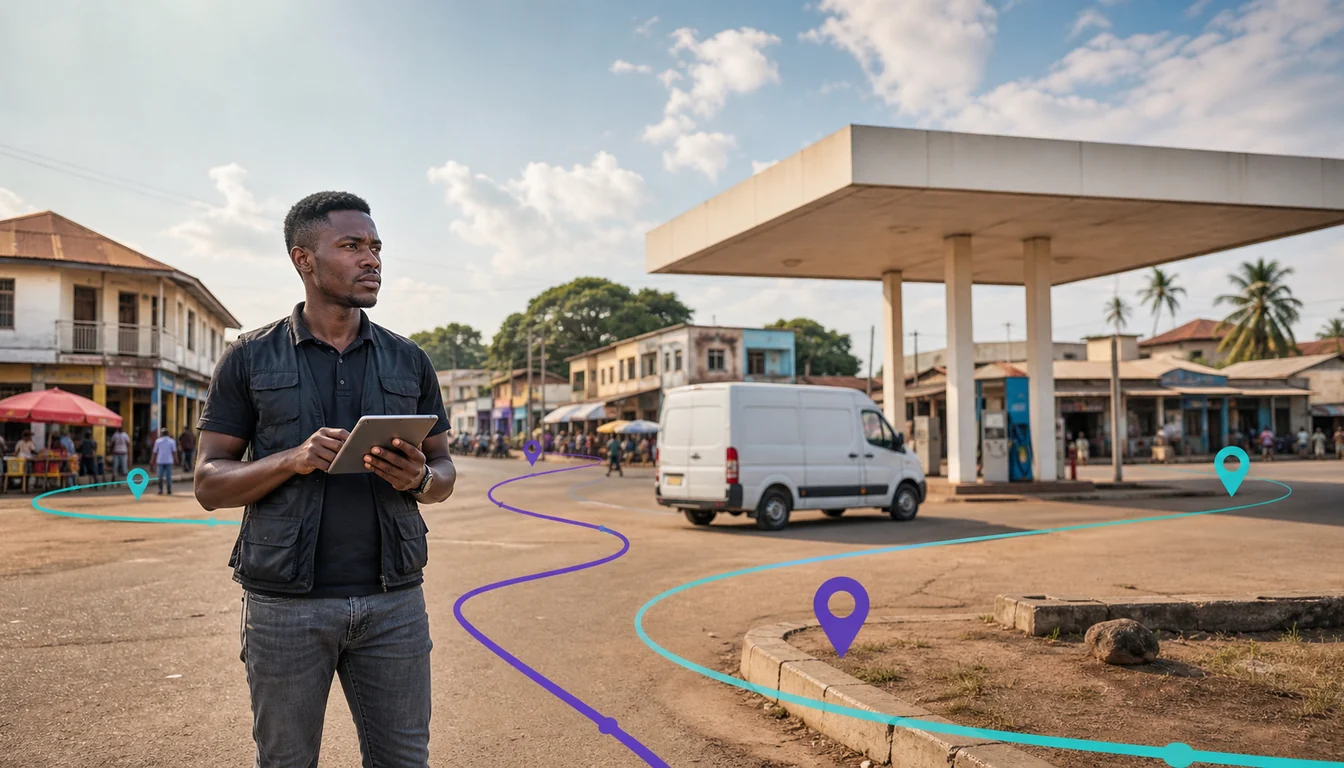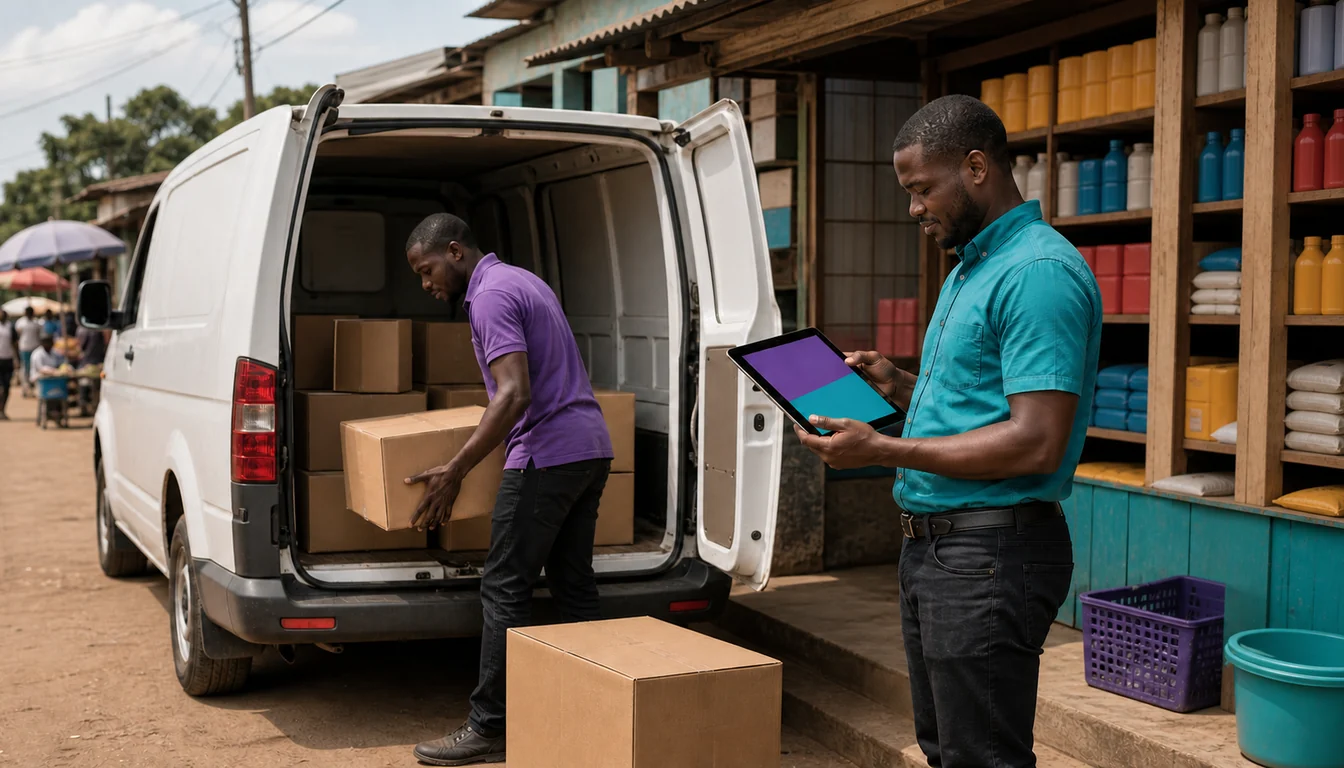
Few parts of Ghanaian retail have moved as visibly in recent years as the supermarket tier. Fascias have changed, chains have taken over space vacated by international operators, and a price-led format has spread through Accra and Kumasi. It is tempting to read that as a signal to shift a brand's commercial weight towards modern trade. It is not. Traditional trade still moves the overwhelming majority of FMCG volume in Ghana, and the brands that will own the next few years are the ones that grow their modern-trade business without quietly starving the provision shops, kiosks, container shops, table-top sellers and market stalls that pay the bills today.
Ghana's Modern Trade Is Changing Hands
The most consequential change is a franchise handover. Carrefour Group took over an existing Ghanaian supermarket franchise in partnership with Brands For All, and the stores traded under the new fascia by April 2026. For a supplier, a change of franchisee is never cosmetic. Ranging is reviewed, listing terms are renegotiated, planogram standards are reissued, and the reporting a supplier used to receive changes shape at the same moment.
Alongside that, Melcom, the largest Ghanaian-owned chain, has been expanding for years, including into retail space left behind by an international operator that exited the market from 2022. The price-led China Mall format has grown its footprint, and MaxMart, Palace and All Needs continue to trade. None of these are 1Channel customers or partners; they are simply the market context every commercial team in the country now plans around. Two rules are worth holding onto while you plan. First, resist quoting a chain's store count in a business case, because published figures for the same chain have differed by close to ten stores within a single quarter. Second, remember that modern trade in Ghana is concentrated in Greater Accra and Ashanti, and thins fast as you move north.
What Actually Differs Between the Two Channels
Most teams describe the difference as "bigger orders and better hygiene", which is not useful enough to design an operating model around. The real differences are structural, and each one changes what your field force is being asked to do.
Range Is Decided in a Buying Office, Not at the Shelf
In modern trade a stock keeping unit is either listed or it is not, and that decision is made centrally, in a category review, for every branch at once. Your Key Account Manager wins or loses a whole chain's distribution in a single meeting. In traditional trade nothing is listed. Availability is rebuilt outlet by outlet, week by week, by whoever restocks that shop, and a stock keeping unit can be present in one provision shop and absent from the kiosk twenty metres away. That is why range and assortment control in the two channels is a different exercise: one is a negotiation, the other is a coverage discipline that never finishes.
Planogram Compliance Versus Frontage Visibility
Modern trade gives you a planogram, a bay position and an agreed number of facings, so compliance is measurable against a published standard and best evidenced with a dated photograph. Traditional trade has no planogram at all. The equivalent fight is frontage: the counter-top position, the hanging strip in the doorway, the shelf a shopper can see from the street, the cooler by the entrance and whether the branded POSM you paid for is still on the wall a month later. Both are execution, but you cannot audit them with the same checklist, which is the practical case for channel-specific merchandising checklists rather than one generic store visit form.
Centralised Terms Versus Payment at the Counter
A chain buys on a purchase order against agreed credit terms, settles centrally on its own remittance cycle, and takes deductions you will have to reconcile line by line. Traditional trade settles at the point of delivery, and in Ghana that means mobile money and cash side by side. MTN MoMo, Telecel Cash and AT Money are fully interoperable through GhIPSS, GhQR gives a single merchant QR standard, and GhanaPay sits alongside them, so a wallet payment from any network settles in seconds. Cash is still entirely real at the table-top and market-stall tier. The reconciliation problem is genuinely different at each end of the channel: chain deductions against invoices on one side, and a mixed wallet-and-cash collections trail that has to be tied back to the route on the other.
Promotion Mechanics and How a Claim Gets Settled
Modern-trade investment tends to be negotiated and contractual: a listing, a gondola end, a period of feature pricing, a share of a chain's own promotional calendar. The claim is settled against the chain's report and often arrives as a deduction rather than a payment request. Traditional-trade investment is retailer-facing and mechanical: bundles, slab schemes, free goods, a display incentive at a market stall. The claim has to be evidenced by the person who was standing there, with a captured sale and a photograph. Both spike around the same Ghanaian peaks, Christmas and Easter above all, with Homowo, Odwira and Akwasidae in the south and Damba and Eid in the north shaping local demand, so both sets of claims land on your finance team in the same fortnight and need one place to be validated.
Data That Arrives Versus Data Somebody Has to Capture
This is the difference that quietly distorts strategy. A chain sends you a sell-out report, in the chain's own format, on the chain's own clock. It is imperfect but it lands in your inbox without anybody visiting a store. Traditional trade sends you nothing. Every figure you will ever have comes from what a Field Sales Representative or a key distributor's own distributor sales representative captured on a device during a call. Because the key distributor employs the selling team while the brand employs the supervisory layer, secondary sales go dark precisely where most of your volume is. The result is predictable: the channel that reports itself gets discussed in every review, and the channel that has to be measured gets discussed only when something breaks.
Why Brands Cannot Trade One Channel for the Other
Modern trade earns disproportionate management attention because it is legible, and because a listing win feels like progress in a way that eleven extra provision shops does not. But three things keep traditional trade structural in Ghana rather than residual.
Reach is the first. Sixteen regions and a district tier of Metropolitan, Municipal and District Assemblies is a lot of geography for a channel concentrated in two commercial regions to serve. Supermarkets do not cover Upper West, Savannah or North East in any meaningful way. Frequency is the second: a shopper buying a single sachet on the way home is buying from a kiosk, not from a supermarket aisle, and that purchase pattern is what drives repeat volume in beverages, personal care and packaged foods. Price perception is the third, and it now runs both ways. A price-led modern-trade format can reset what a shopper believes an item should cost, which shows up as pressure on your traditional-trade price ladder within weeks. Managing those two ladders as one system, rather than as two teams making local decisions, is the real reason to keep pricing under one set of rules. If you want the traditional-trade side of this argument in more depth, our post on winning across Ghana's provision shops, kiosks and market stalls covers the coverage economics.
One Outlet Master, Different Rules Per Channel
The common failure is not strategic. It is that the two channels end up on two systems, or on one system and one spreadsheet, and nobody can answer a simple question such as how much of a stock keeping unit moved in Kumasi last month across everything. The fix is not to force one process onto both channels. It is to hold one outlet master and let the rules differ underneath it.
A workable outlet master carries every trading point in the country under one identity: supermarket branches and minimarts alongside provision shops, kiosks, container shops, table-top sellers and market stalls, each geo-tagged at the door. Geo-tagging matters more than an address here, because GhanaPostGPS exists as the official digital addressing standard but everyday navigation is still landmark-led, so the pin is what makes a beat repeatable. On top of that single master you then vary the things that genuinely should vary: call frequency, the visit checklist, price list and scheme eligibility, credit rules, and who owns the relationship. Outlet and store management and territory design are where those channel rules should live, so that adding a chain's new branch or a newly recruited market stall is the same operation with different attributes, not a different project.
Execution Standards That Travel Across Both Channels
Different rules do not mean different definitions. A brand needs one answer to what "available" means, one must-stock list per channel tier, one evidence standard for a photograph, and one way of scoring a visit. Otherwise the modern-trade compliance number and the traditional-trade compliance number cannot sit in the same slide, and the argument about which channel deserves next quarter's investment gets settled by whoever presents more confidently.
In practice that means the audit is common and the checklist is conditional. The same visit records presence, price on shelf, competitor activity and POSM condition. What changes is what the app asks next: planogram sections and share of shelf inside a supermarket, frontage, counter position and cooler placement at a kiosk. Running both through one audit and compliance framework is what makes the comparison honest, and our post on retail execution and merchandising audits across Ghana goes through the checklist design in detail.
Bringing Both Channels Into One Set of Numbers
Once the outlet master and the execution standards are shared, the reporting problem becomes tractable. Chain sell-out files can be mapped to the same stock keeping unit hierarchy and the same outlet identities as the secondary sales your field force captures, so a national picture stops being an act of assembly at month end. Distributor claims, chain deductions and retailer schemes can be validated against the same records rather than against three different sources of truth.
Compliance points the same way. E-VAT invoicing is already mandatory in Ghana for every VAT-registered business, issued through a Certified Invoicing System connected to the Ghana Revenue Authority, and the VAT reform that took effect on 1 January 2026 changed how levies flow through input tax. That is not a future project to prepare for; it is a live requirement, and it is far easier to satisfy when invoicing across both channels comes off one transaction trail rather than out of a chain-specific process nobody else can see. Sales analytics built on that single trail is what finally lets a commercial team compare a listing win with a coverage gain in the same currency, which is GHS revenue per outlet served.
How 1Channel Helps Cover Modern and Traditional Trade in Ghana
1Channel runs modern trade and traditional trade on one platform, with one outlet master and one set of execution standards, and channel-specific rules layered on top. Ghanaian teams use it to keep a Key Account Manager working a chain's branches and a Field Sales Representative working a market cluster inside the same system, reporting into the same numbers.
- One geo-tagged outlet master covering supermarkets and minimarts alongside provision shops, kiosks, container shops, table-top sellers and market stalls, across all 16 regions and their MMDAs, built for landmark-led navigation rather than street addresses.
- Channel-aware visit templates: planogram and share-of-shelf capture in modern trade, frontage, counter position and POSM condition in traditional trade, scored against one common compliance definition.
- Separate price lists, credit rules and scheme eligibility per channel and per customer, so a chain's negotiated terms and a market stall's slab scheme can coexist without manual workarounds.
- Collections in GHS across mobile money and cash, with wallet payments over the interoperable GhIPSS rails and cash at the smallest tier reconciled back to the route and the outlet.
- Key-distributor and sub-distributor visibility, so secondary sales below the KD are captured on the device instead of being reconstructed from the distributor's own books weeks later.
- Trade spend, claims and chain deductions validated against captured evidence, with invoicing records that align with Ghana's E-VAT regime under a Certified Invoicing System.
Run Both Channels From One Retail Execution Platform
See how 1Channel's retail execution software keeps supermarket branches and provision shops on one outlet master with different rules for each.
Explore Retail Execution Software →Key Takeaways
Ghana's modern trade is being reshaped in real time, but the arithmetic of FMCG volume has not changed. The brands that handle this well treat the two channels as one commercial system with two operating rhythms.
- Modern trade is changing hands, not simply growing. A franchise handover to Carrefour with Brands For All, Melcom's continued expansion and the spread of a price-led format have all reset ranging, terms and reporting for suppliers.
- Traditional trade still carries the volume. Provision shops, kiosks, container shops, table-top sellers and market stalls deliver the reach and purchase frequency that supermarkets concentrated in two regions cannot.
- The differences are structural, not cosmetic. Central listing against outlet-by-outlet availability, planogram against frontage, remittance cycles against mobile money and cash at the counter, and reports that arrive against data somebody has to capture.
- One outlet master, different rules underneath. Geo-tag every trading point once, then vary call frequency, checklist, price list, scheme eligibility and credit by channel rather than by system.
- Keep one definition of execution. A shared compliance definition and evidence standard is what makes a modern-trade score and a traditional-trade score comparable in the same review.
- Compliance is already live. E-VAT invoicing through a Certified Invoicing System applies to every VAT-registered business, so a single transaction trail across both channels is easier to defend than two.
Growing modern trade and protecting traditional trade are not competing plans. They are the same plan, executed with different rules, measured on one set of numbers, and run from one platform rather than two.