Complete distribution management tools to streamline distributor operations, order processing, inventory control, and secondary sales across your distribution network
Retailer orders, approvals, inventory allocation, delivery notes, and secondary sales
Track sellable stock, warehouse inventory, transit stock, and automate replenishment
Multi-warehouse inventory, stock transfers, batch tracking, GRN, and dispatch
Batch-level tracking, FEFO/FIFO/LIFO allocation, expiry monitoring, and stock rotation
Value-based, volume-based, and free goods schemes with auto-application
Customer-specific, geography-based pricing with validity dates and auto-application
Product catalogue with Brand, Category, Product, SKU hierarchy and UOM conversions
Configurable geography hierarchy, beat planning, outlet mapping, and user assignment
No-code workflows with conditions, triggers, notifications, and multi-level approvals
24+ default reports, real-time dashboards, sales trends, and CSV export
Outstanding tracking, credit limits, invoice payment allocation, and credit notes
Multi-level returns, damage claims, credit note generation, and GRN discrepancy
B2B ordering platform for distributors with self-service ordering and payments
Order booking app with GPS attendance, market visits, beat execution, and AI assistant
Conversational AI assistant, auto order validation, intelligent FIFO/FEFO, and automation
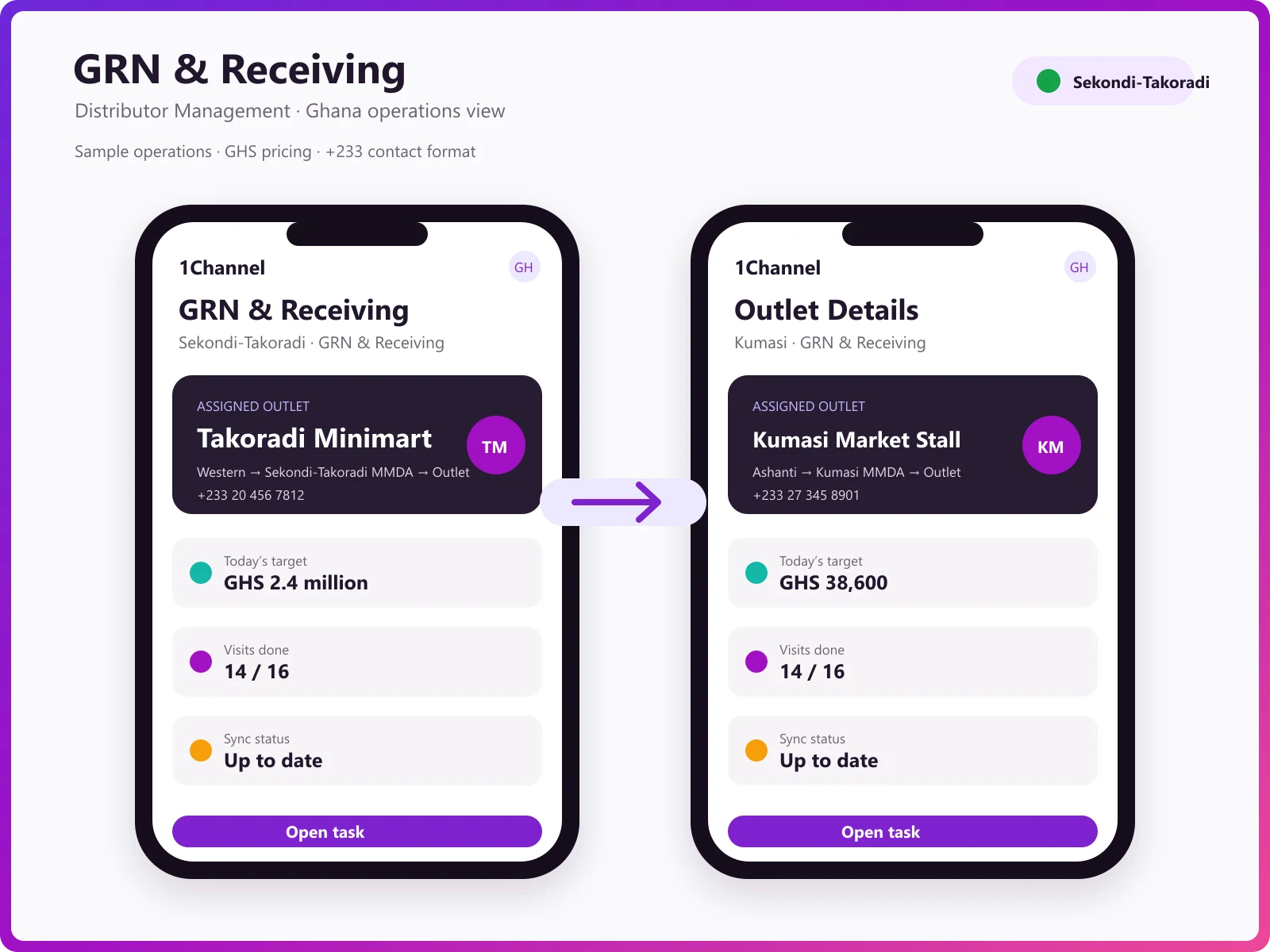
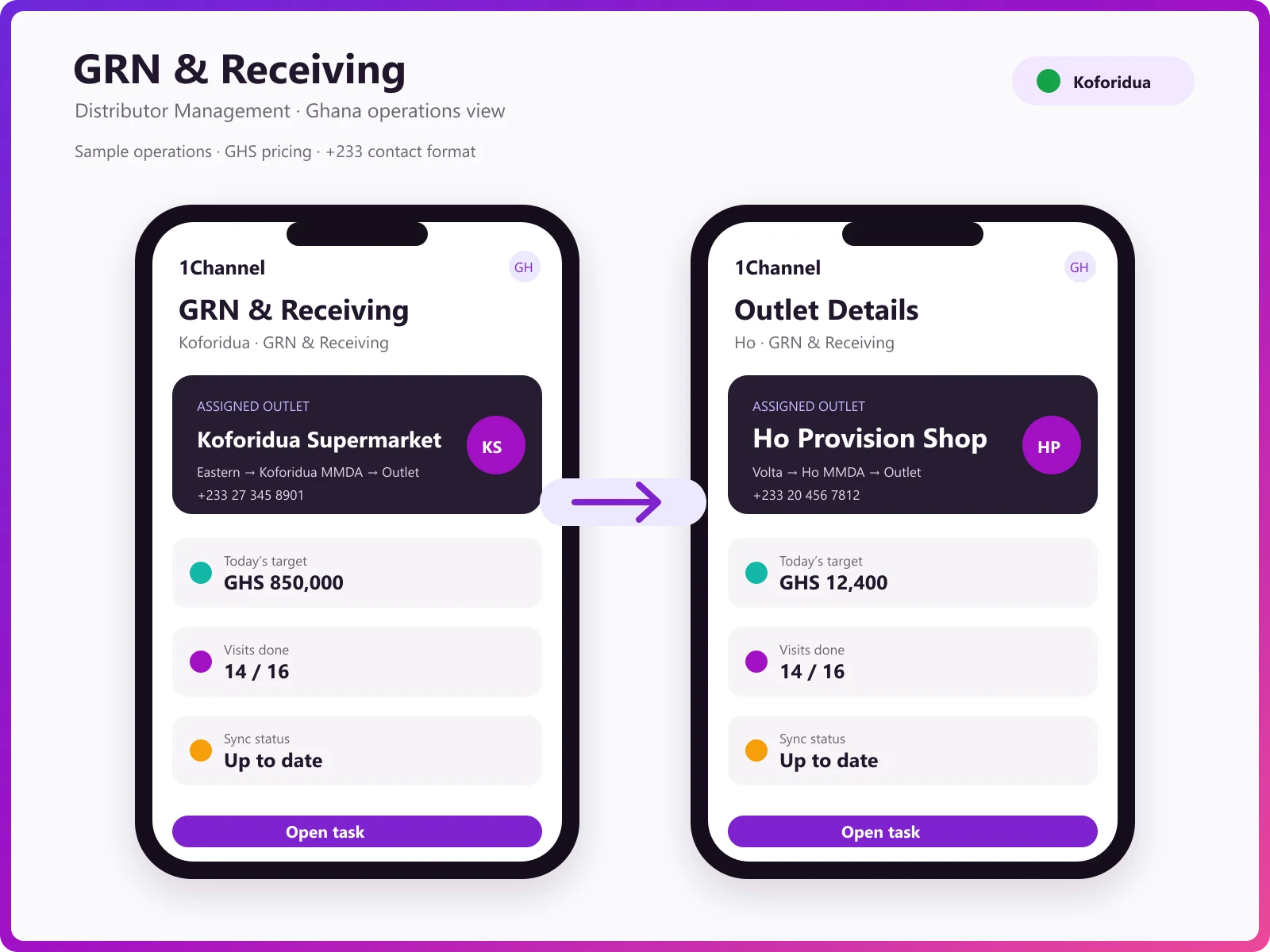
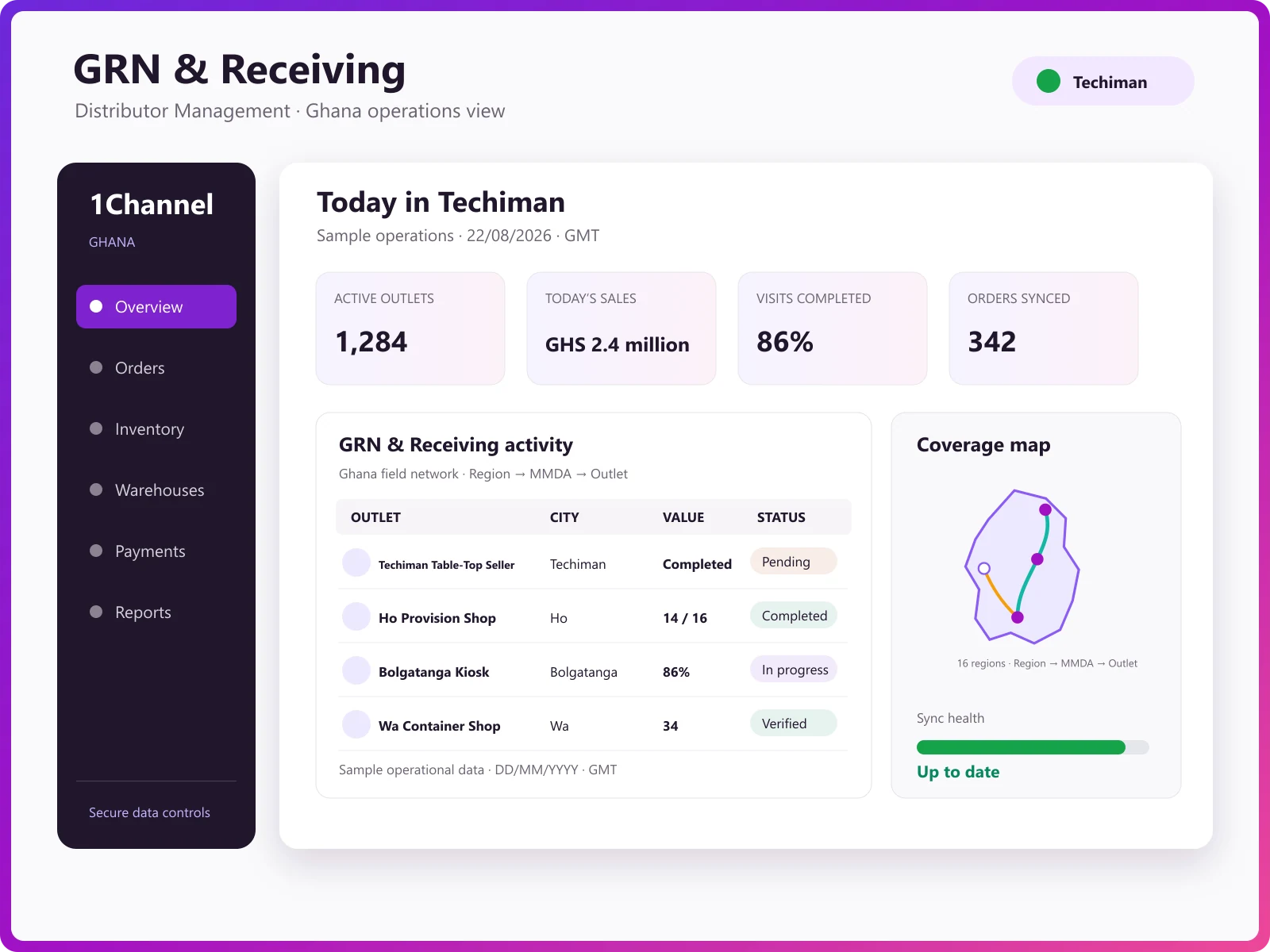
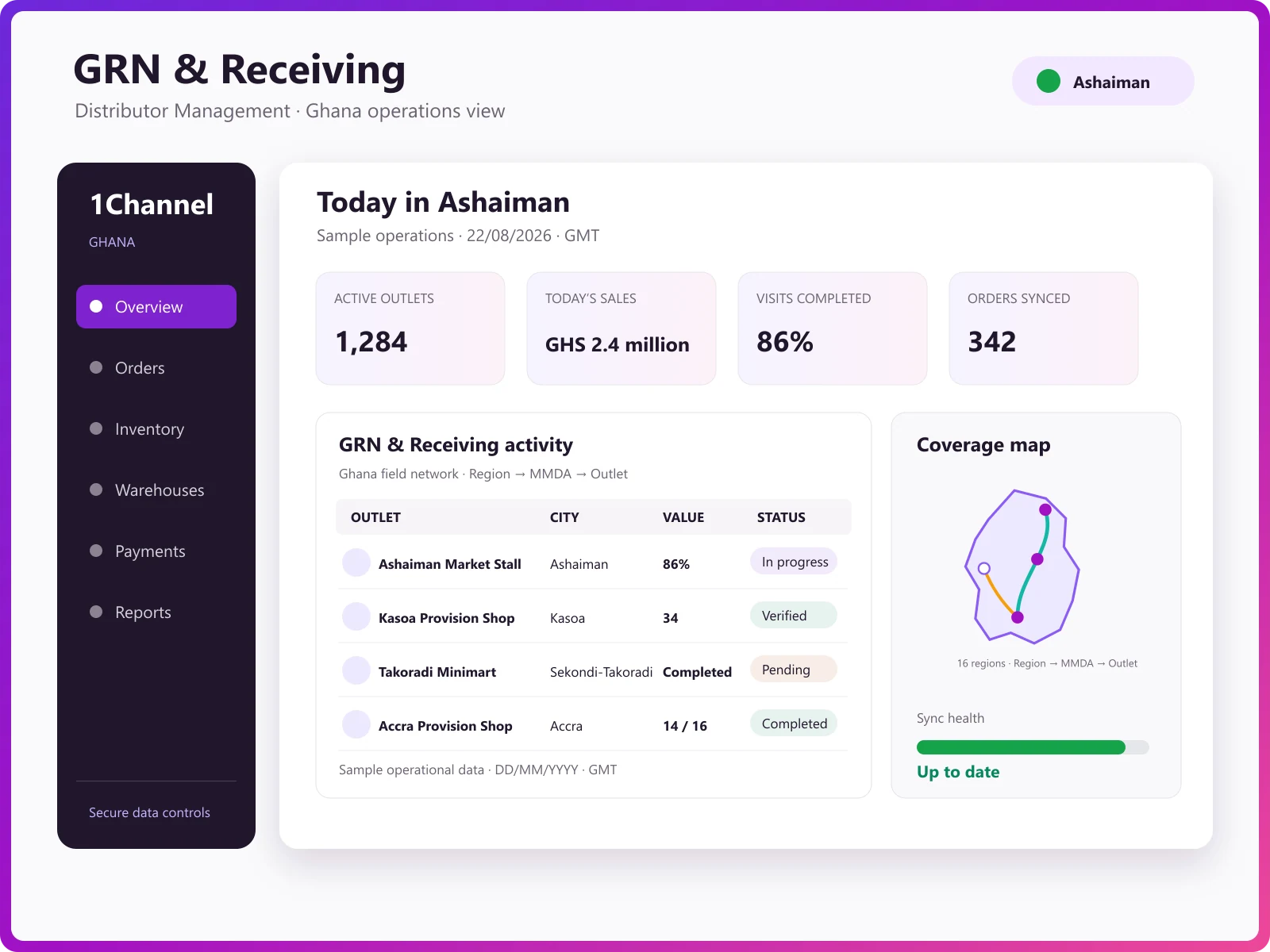
Admin portal: a receiving manager works the register by supplier, warehouse and status, watching what is still open against what has already closed. Mobile app: the person at the bay keys quantities, records batch and expiry, names the destination warehouse and marks whatever arrived short or broken, with the note held on the handset until signal returns.


Practical guides for selling and distributing across the Ghanaian market.
Our recognitions constantly motivate us to push the envelope of excellence and empower our customers with winning ideas each day.
Every receipt starts as a note tied to its own source document, whether the consignment came off a brand plant loading bay or out of a container cleared at Tema.
Features:
Why It Matters:
Nothing reaches the depot ledger without a document standing behind it, which is the difference between a record and a recollection.
What was counted is read against what was ordered and what was invoiced, and the gap goes back to the sender instead of into the stock figure.
Features:
Why It Matters:
A shortfall absorbed at the bay resurfaces weeks later as an unexplained variance, and by then nobody can say whose it was.
Name the destination before confirming, and that depot stock position moves the moment the note is posted.
Features:
Why It Matters:
Stock is counted where it actually sits, so orders and transfers are planned against a real depot position rather than a regional total.
Batch, manufacture date and expiry belong on the note, not in a spreadsheet reconstructed after somebody asks a question.
Features:
Why It Matters:
With intake data this clean, a Food and Drugs Authority recall becomes a query against the register instead of an investigation across depots.
Which suppliers deliver what they invoiced, which depots take longest to close a receipt, and where the same shortfall keeps repeating.
Features:
Why It Matters:
A supplier conversation goes differently with a season of receiving history behind it than with an argument about last Tuesday.
At 1Channel, we celebrate every step of our new customers journey, market of geography, or higher customer satisfaction score to become the preferred Field Sales CRM leader.