Complete distribution management tools to streamline distributor operations, order processing, inventory control, and secondary sales across your distribution network
Retailer orders, approvals, inventory allocation, delivery notes, and secondary sales
Track sellable stock, warehouse inventory, transit stock, and automate replenishment
Multi-warehouse inventory, stock transfers, batch tracking, GRN, and dispatch
Batch-level tracking, FEFO/FIFO/LIFO allocation, expiry monitoring, and stock rotation
Value-based, volume-based, and free goods schemes with auto-application
Product catalog with Brand, Category, Product, SKU hierarchy and UOM conversions
Configurable geography hierarchy, beat planning, outlet mapping, and user assignment
No-code workflows with conditions, triggers, notifications, and multi-level approvals
24+ default reports, real-time dashboards, sales trends, and CSV export
Outstanding tracking, credit limits, invoice payment allocation, and credit notes
Multi-level returns, damage claims, credit note generation, and GRN discrepancy
Goods receipt notes, ordered vs received validation, and batch tracking
B2B ordering platform for distributors with self-service ordering and payments
Order booking app with GPS attendance, market visits, beat execution, and AI assistant
Conversational AI assistant, auto order validation, intelligent FIFO/FEFO, and automation
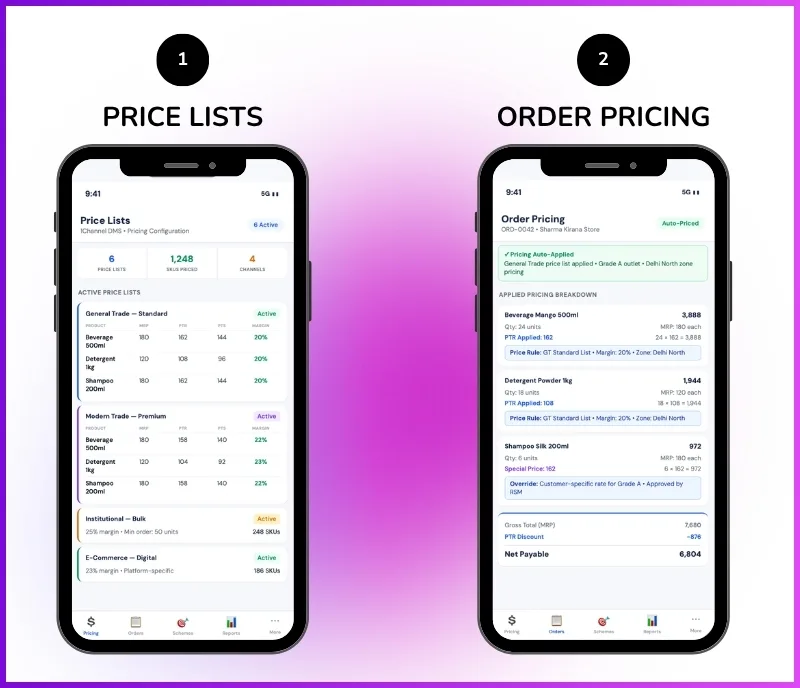
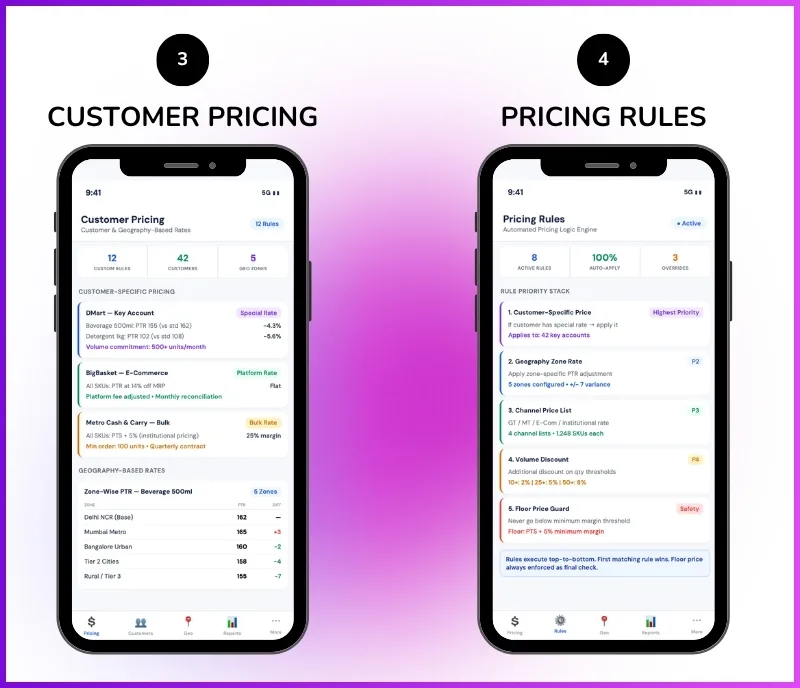
Admins create price lists by selecting the scope (customer-specific, customer-type, or geography-based), configuring product-wise rates, and setting validity dates with active status. During order placement, when a field user or distributor selects a customer and adds products, the system checks for applicable price lists based on the customer profile. If a matching list with valid dates exists, those rates apply to the order. If no specific list matches, the default product pricing is used as a fallback. Separate price lists can be managed for all pricing scenarios simultaneously.


Our recognitions constantly motivate us to push the envelope of excellence and empower our customers with winning ideas each day.
Create and manage multiple price lists with product-wise rates, validity dates, and active status for different pricing scenarios.
Features:
Why It Matters:
Structured price lists with validity controls ensure rates are always current and prevent expired pricing from being applied to orders.
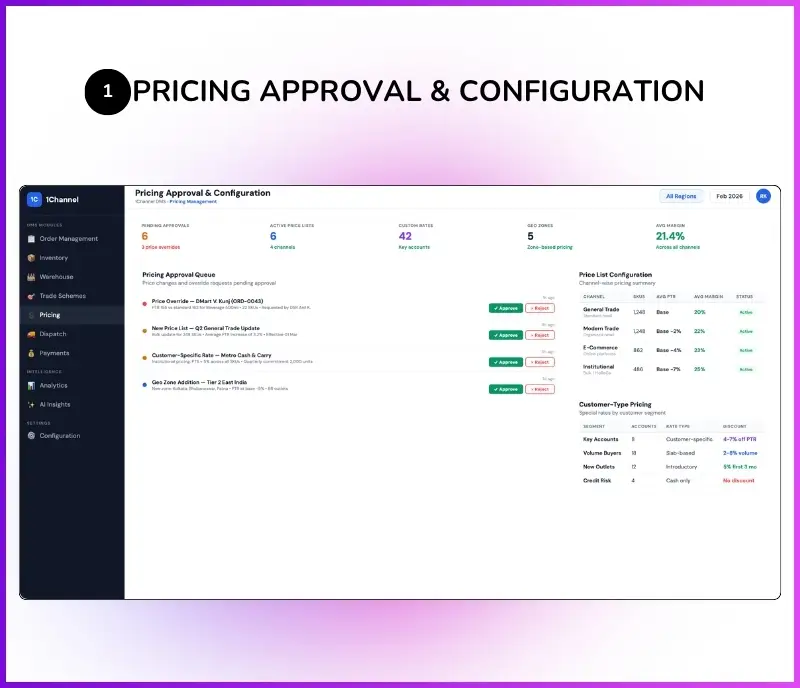
Assign price lists to individual customers or customer types like distributors, super stockists, and retailers.
Features:
Why It Matters:
Each level of the distribution hierarchy gets appropriate rates, protecting channel margins and ensuring pricing consistency across all orders.
Set different product rates for different regions so pricing reflects local market conditions and cost structures.
Features:
Why It Matters:
Geographic pricing accounts for regional cost differences, logistics factors, and market dynamics across the Indonesian archipelago.
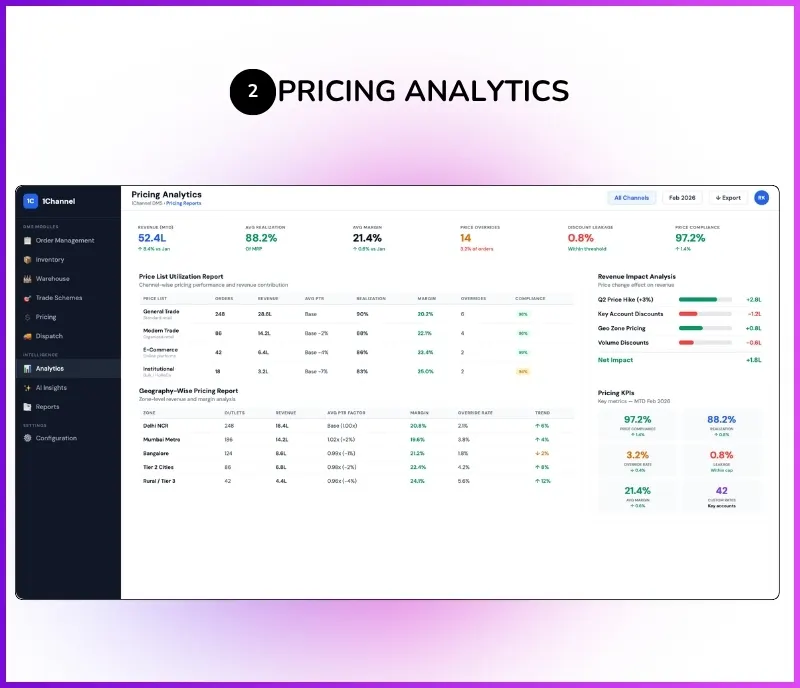
The system applies the right price list automatically during ordering, falling back to default product pricing when no specific list matches.
Features:
Why It Matters:
Automated pricing eliminates manual rate lookups during ordering and ensures every order always has the correct, validated price applied.
Monitor price list usage, margin impact, and pricing consistency across customers, regions, and product categories.
Features:
Why It Matters:
Pricing analytics reveal inconsistencies, margin leakage, and opportunities to optimize rate structures across the distribution network.
At 1Channel, we celebrate every step of our new customers journey, market of geography, or higher customer satisfaction score to become the preferred Field Sales CRM leader.