Cloud DMS for Logistics, Courier and Field Service Networks across South Africa
Written for South African 3PL, courier, last-mile and field-service operators: linehaul that stays traceable from the Durban and Cape Town quaysides up the N3 and N1, every driver and technician accounted for, proof of delivery captured whether or not there is signal, and subcontractor payouts settled in rand.
Where a Freight and Service Operation Wins the Month
Ask a South African operator where the month is actually decided and the answer lands in the same three places. Linehaul that stays traceable from the port through the inland terminal to a branch in Bloemfontein, Gqeberha or Polokwane. Drivers and technicians whose work is recorded even on a route where mobile coverage runs thin. And a rate card that turns distance, fuel and SLA into one rand payout nobody has to argue about afterwards.
Port-to-Branch Linehaul on the N3 and N1
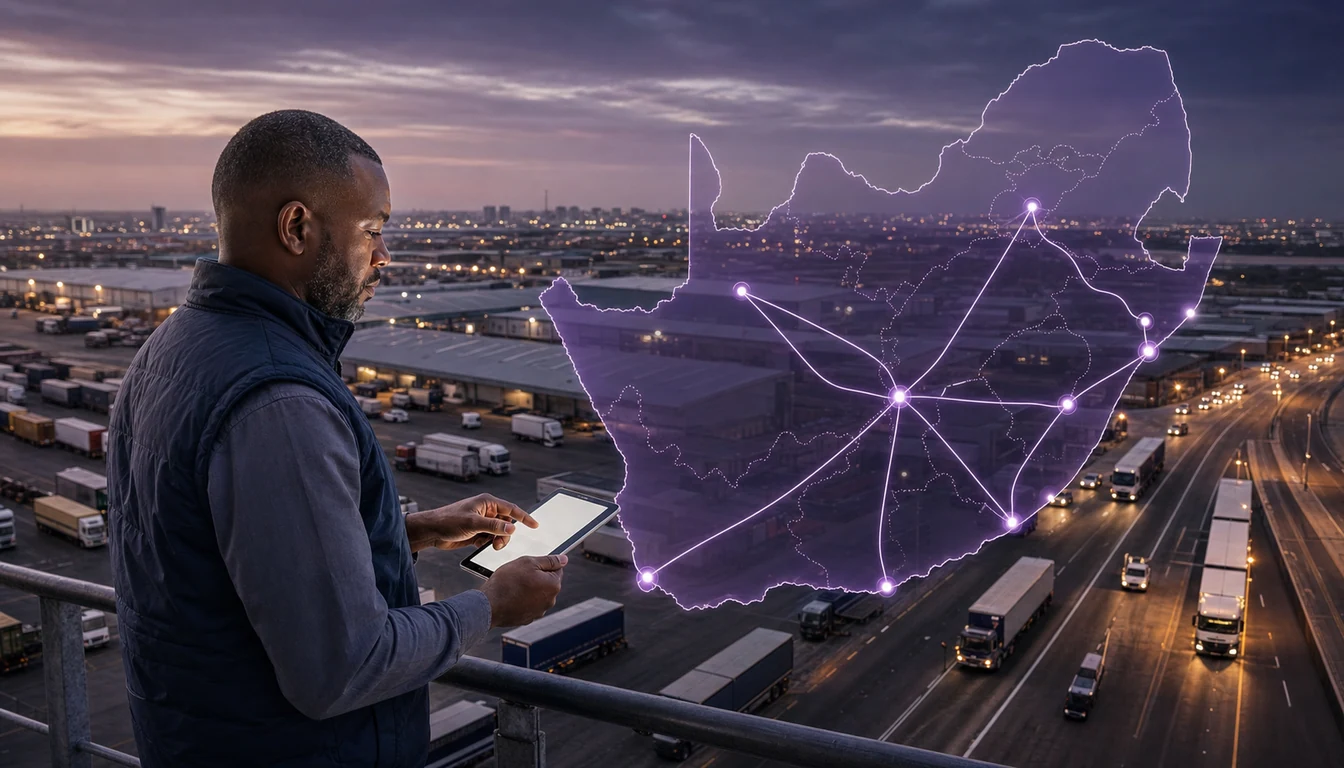
A booking reaches the same cloud order queue whether it came off a shipper portal, an API feed or a counter clerk. Corridor and hub class decide how it moves, and every handover is stamped from the quayside through the inland terminal to the receiving branch. Running time and fuel sit inside the SLA, so a hub that has started slipping is visible before the next dispatch cycle rather than at the close.
Drivers, Vans and Technicians Tracked Offline
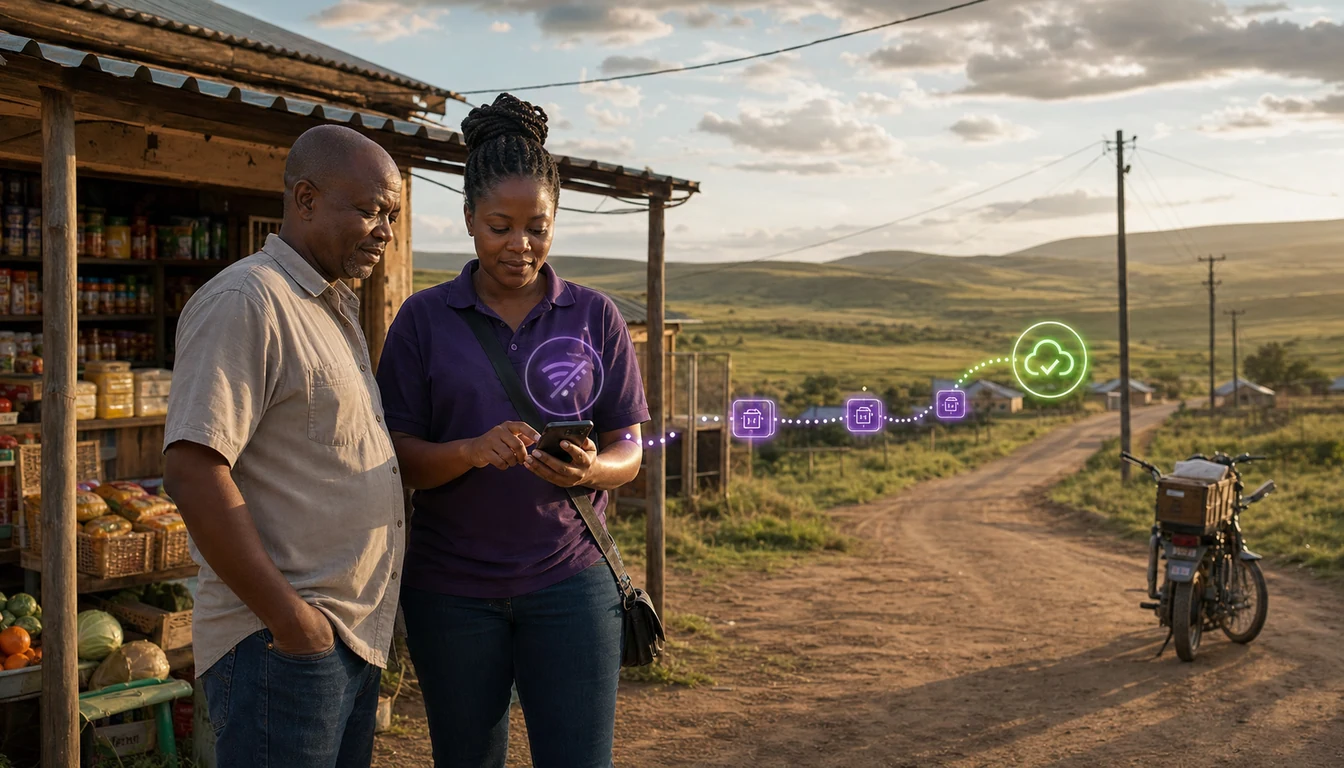
Coverage still falls away on long rural routes and in pockets of dense trading areas, which is why the mobile app was built to work with no bars showing at all. Drivers, van crews and service technicians scan, sign off proof of delivery, take a cash or card collection and close a job on the handset. The queue empties as soon as a connection returns, carrying temperature readings and the SAHPRA-ready trail on regulated loads with it.
Reverse Logistics and Subcontractor Payouts
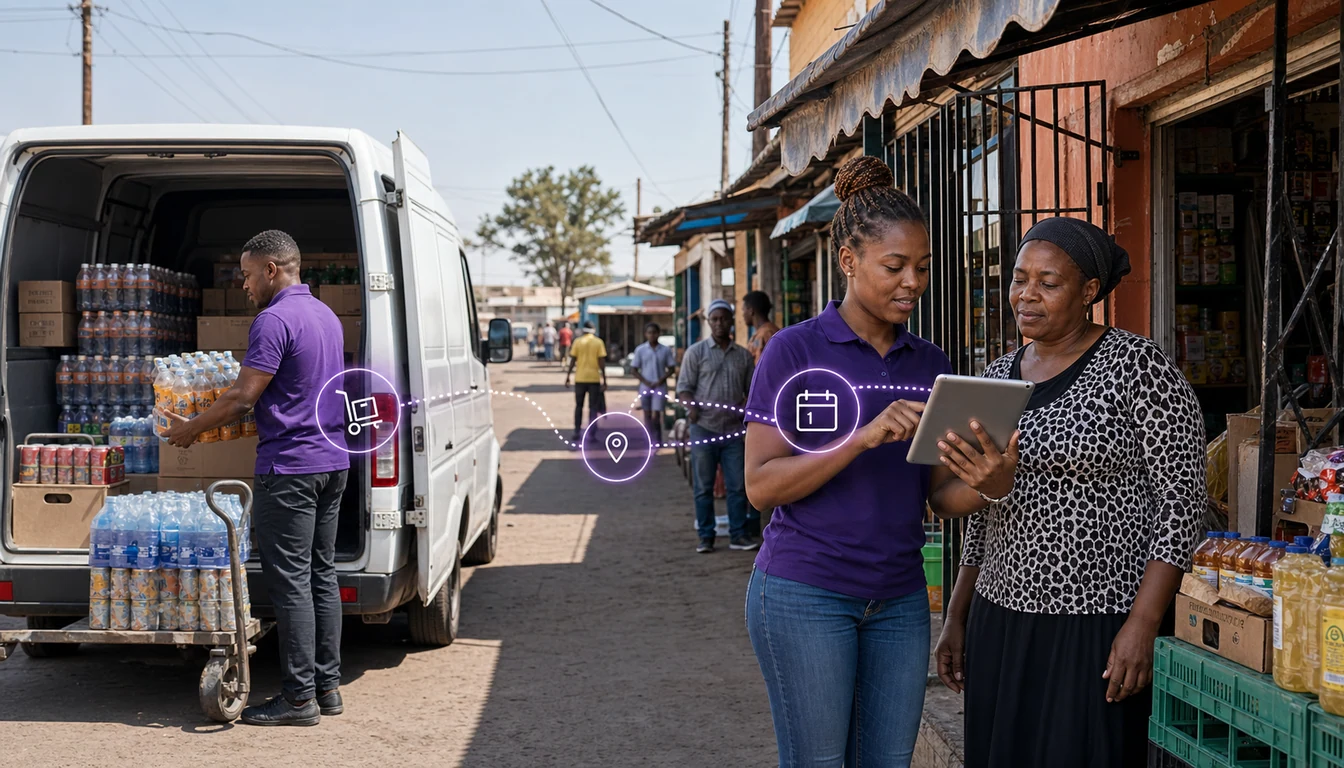
A failed drop closes with a reason code, a photograph against the damage claim and a collection booked into a later run — which is what saves the second attempt where street addressing is inconsistent. Contract pricing carries the slab, the fuel surcharge and the SLA penalty, and partner billing settles it against card, instant EFT and PayShap receipts.
Reading for Dispatch, Linehaul and Field Service Teams
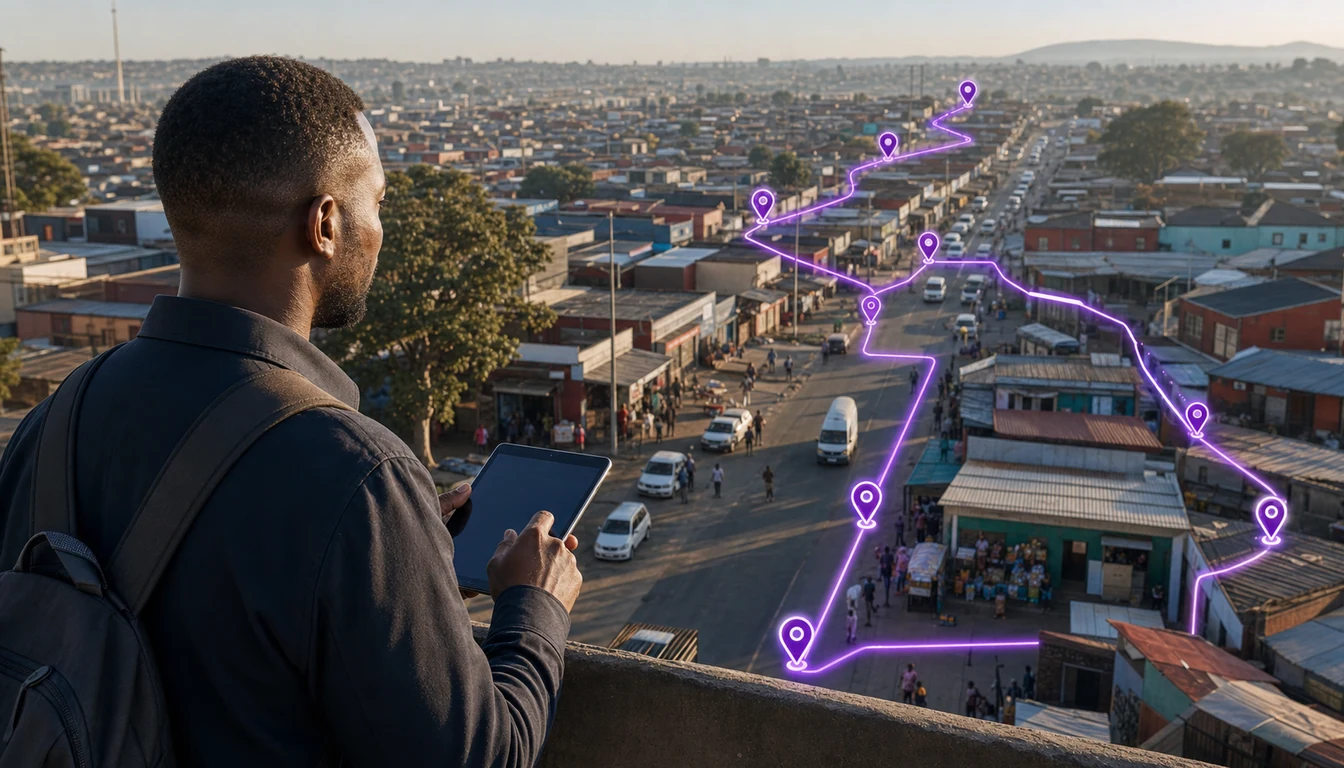
Short practical pieces for hub, last-mile and service teams: capturing work where the signal drops away, planning a township beat by GPS, weighing van sales against pre-sales, and covering the long freight corridors.
From Booking and Bin Through Cold-Chain Audit to Credit Note
Everything an operator touches in a week sits on one cloud: the consignment and asset master at one end, RTO and damage returns at the other, and dispatch in between. Rules are set per corridor, and settlement handles cash on delivery, card and instant EFT without a separate reconciliation.
Booking, Routing and Manifest Build
Order automation that picks the corridor, allocates the SLA, adds the fuel surcharge and consolidates the manifest. A load moves from the port gate to a last-mile driver or a service crew without being retyped once, and the route is planned around traffic and around suburbs where street addressing is inconsistent.
Stock, Warehousing and Van-Boot Spares
Stock is held per branch across consignment inventory, technician van-boot spares and the pool sitting on the return leg. Warehouse takes care of bin locations, pick-and-pack and branch-to-branch transfers between Johannesburg, Durban and Cape Town. Batch tracking carries lot traceability on pharmaceutical and perishable cold-chain loads.
Cold Chain and SAHPRA-Ready Traceability
Refrigerated runs log temperature continuously, thresholds are set per category, and a breach raises an alert the moment it happens. Medicines, vaccines and frozen lines going to pharmacies, clinics and national-chain cold rooms leave a complete trail behind them, so a SAHPRA or customer query is answered from the cloud, batch by batch, rather than reconstructed from paperwork.
Two apps carry the daily work — one at the hub and on the last mile, one for the sales pipeline. Both are published on Google Play and the Apple App Store, and both write into the same cloud backend as the admin portal.
One DMS for Linehaul, Last Mile, Field Service and Settlement
Speak to 1Channel about a logistics and field-service DMS rollout in South Africa: traceability from the quayside through the inland terminal to the branch, proof of delivery that survives a dead spot, a cold-chain trail ready for a SAHPRA query, RTO handled automatically, and subcontractor billing settled in rand.
How is a load tracked from the port through to a regional branch?▼
Each stage writes its own record. Receipt at the port-side hub in Durban or Cape Town, throughput across the sortation belt, the inland terminal at City Deep in Johannesburg, branch stock in Pretoria, Bloemfontein, Gqeberha, East London or Polokwane, and finally allocation to a last-mile driver or van. Every tier carries routing rules and SLA targets set against the running time and fuel cost of the corridor it sits on, which is how a hub that has begun to drift shows up before the next dispatch cycle rather than in the month-end review.
Does the app keep working where mobile coverage is poor?▼
Yes, and that is why the driver and technician app was built offline-first rather than merely offline-tolerant. Coverage thins out on long rural routes and in pockets of dense trading areas such as Warwick Junction in Durban or around the Bree taxi rank in Johannesburg. Scans, proof of delivery, cash and card collections and job updates are written to the handset and pushed up the moment the device finds data again, so nothing between the field and the hub is left to anyone's memory.
How is a single consignment traced across handovers?▼
A waybill number is issued at booking and stays with the load from there. It is scanned at the port-side hub, on the sortation belt, into and out of the branch, at the last-mile bin, and again when the driver goes out for delivery. Skip a scan and an exception is raised there and then, so a parcel cannot slip quietly out of the network somewhere between the coast and an inland branch, and the tracking page a customer refreshes shows where the item genuinely is.
What evidence does a cold-chain run leave behind?▼
Vaccines, medicines and frozen or chilled goods each sit inside a threshold band set by category. Sensors log temperature along the route, and a breach reaches the dispatcher and the receiving site automatically instead of being discovered at offloading. The trail runs from the origin cold room to the door, batch by batch, and it holds enough detail to answer a SAHPRA or customer query, so a distributor supplying pharmacies and clinics can show the chain never broke on the trip inland.
How are subcontractor and owner-driver payouts worked out?▼
Every subcontracted fleet, franchise partner and owner-driver has a contract master behind it holding volume slabs, distance and corridor bands, the fuel surcharge and the SLA tier, all priced in rand. Payouts are generated against the on-time and POD-confirmed rate, not against an invoice someone typed up on a Friday. Card, instant EFT and PayShap receipts post to the partner ledger on their own, so no rate card is looked up by hand and no partner ends the month over- or under-paid.
How are service technicians scheduled and their spares controlled?▼
Jobs are allocated by territory and by skill, and the day is planned off GPS pins because street addressing is inconsistent in parts of most metros. Spares are counted in three places: the central warehouse, the branch, and the technician's own van boot. Consumption is booked against the customer site so the real cost of the job is known, and a replenishment alert fires as soon as van stock falls under the agreed level. The point of all of it is that nobody arrives at a site in Polokwane or Gqeberha without the part in the boot.
What happens at goods receipt when a load is booked in?▼
At the port-side hub the shipper manifest is scanned and matched on piece count, weight and waybill ID. Anything that does not agree is held as an exception before the load is released inland. Sortation and branch receipts close each handover after that. Goods receipt covers the piece count, a photograph on any damage, and confirmation that the seals were intact — which is how a short-landed or tampered consignment is caught where it entered the network instead of three branches later.
What happens when a delivery fails or arrives damaged?▼
The driver closes the attempt with a reason — nobody at the address, an address that turned out to be wrong or incomplete, a refusal, or cash on delivery that was not there — and an RTO opens on the back of it. A damage claim will not submit without a photograph and the waybill reference. Once it is approved a credit note is raised and the collection is slotted onto the next outbound run on that corridor. Because an address is often given by landmark rather than street number, the app also stores a GPS pin and a note, so the second attempt goes straight to the door.
Will it sit alongside the ERP we already run?▼
Yes. REST APIs move data both ways with SAP, Oracle, Microsoft Dynamics, Sage or a transport and hub system your team built in-house. Bookings, manifests, goods receipts, returns, POD records and invoices travel across without being retyped. Card and instant EFT payout reconciliation feeds back into the finance ledger, and every invoice carries the fields a SARS VAT return expects.
What does each team see when they log in?▼
Operations reads on-time performance, hub throughput, the RTO rate and SLA-breach exposure corridor by corridor. Hub supervisors watch dock productivity, how far sortation has got, and vehicle and driver utilisation. Finance works through revenue per consignment, the fuel-surcharge run rate, profitability by contract, and what came back in cash against what came back on card. Ask 1Voice AI in plain language which N3 lane lost margin this week and it answers off the same data.